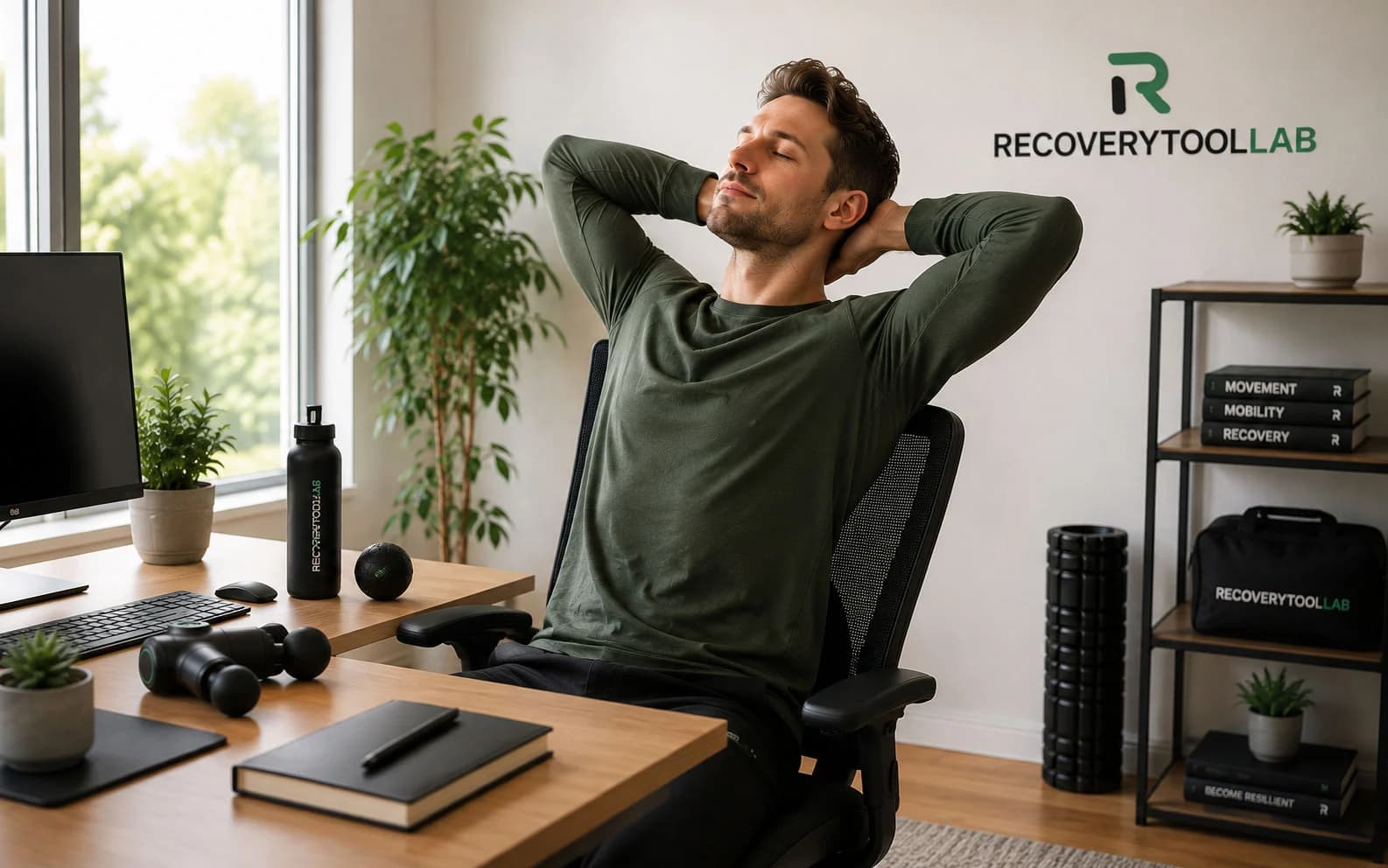
Start by changing the pattern
After hours at a desk, many people want one stretch or device that will “undo” the day. Evidence supports a less dramatic approach: reduce uninterrupted sedentary time where practical and build more movement into the day overall. The World Health Organization recommends limiting sedentary time and replacing some of it with physical activity of any intensity. See the WHO guideline.
U.S. guidance uses the memorable instruction to move more and sit less. It does not set a single ideal sitting limit or universal break schedule because the evidence does not support one. Read the federal guidance.
That means recovery can be adaptable. The goal is not to fear sitting; it is to avoid letting one position occupy the entire day.
A simple transition out of desk mode
Change position first
Stand up without rushing and notice how you feel. A few easy steps around the room may be enough to transition from a static position. If you have been inactive for a long period or have a health condition that affects activity, start with an amount that feels manageable and follow advice from your clinician.
Walk if walking is comfortable
A short walk is accessible, requires no recovery device and moves several joints through repeated cycles. Systematic reviews of controlled laboratory studies suggest light walking breaks can improve some short-term metabolic and cardiovascular measures compared with uninterrupted sitting. Those findings support movement as a useful behavior; they do not establish walking as a treatment for a particular pain complaint. Review the cardiovascular evidence.
Explore comfortable motion
Move the hips, spine, shoulders and ankles through ranges that feel controlled. You do not need to force a stretch or chase a particular sensation. The aim is to reintroduce variety after a static day, not to correct your anatomy in one session.
For more detail, use our Mobility for Desk Workers guide. If the front of the hips is your main area of interest, read Hip Mobility for Desk Workers.
Movement breaks during the day matter too
An evening routine can be pleasant, but it does not need to carry the full burden of a sedentary workday. Prompts, standing tasks, walking meetings and placing frequently used items away from the desk can create more opportunities to move.
A Cochrane review found low- to very-low-quality evidence for many workplace interventions. Sit-stand desks may reduce workplace sitting in the first year, while evidence for several other strategies remains uncertain. This is a useful reminder that behavior and context matter more than owning equipment. Read the Cochrane review.
Where mobility fits
Mobility work can help you practice a range of motion, but it is not a diagnosis and should not be framed as “repairing” a body that sat incorrectly. A practical sequence might include easy active movements, followed by a comfortable hold if stretching feels useful. Keep the effort below sharp pain and avoid forcing end range.
Longer-term stretching programs can increase joint range of motion in healthy people, though the size and location of the effect vary. That evidence does not mean every desk worker needs the same stretch or that stiffness identifies one shortened muscle. See the systematic review.
Recovery tools are optional
Heat, rollers, massage devices and targeted pressure tools can change how a routine feels. They should remain secondary to regular movement and should have a clear job.
- Heat may be used for comfort when it is safe for the individual and used according to instructions.
- A foam roller or massage ball may provide a temporary sensory input or range-of-motion change.
- A mobility strap may make a position easier to reach without forcing it.
- A targeted pressure tool concentrates force and deserves more cautious placement and intensity.
Our unranked guide to recovery tools for desk workers explains these categories and their limitations.
Recovery habits beyond the desk
Sleep, overall physical activity, training load and stress can all influence how a person feels, but this article does not diagnose the cause of stiffness or discomfort. A single device should not be expected to compensate for inadequate activity or an unsuitable training load.
Federal guidance recommends that adults work toward a combination of aerobic and muscle-strengthening activity, with inactive adults starting small and building gradually. Individual capacity and medical context matter. See the current U.S. guidance.
When to seek professional evaluation
Ordinary stiffness that changes with movement is different from a diagnosis. Seek prompt medical attention for warning signs such as new weakness or numbness, bowel or bladder changes, difficulty walking, fever with back pain, severe pain after a fall, or pain that is severe and unrelenting. Persistent or worsening symptoms also deserve professional assessment. Review MedlinePlus warning signs.
How long should a recovery routine take after sitting?
There is no evidence-based universal duration. A brief routine that you can repeat comfortably is more practical than forcing a long session. Regular movement across the day matters too.
Do I need to stretch immediately after work?
No. Walking, changing position or another comfortable activity may be enough. Stretching is one option, not a requirement.